
Call-Shot at Phu Tho: Duong Quoc Hoang and the 10-Ball World Championship That Refuses to Reward Luck
**Câu trả lời cốt lõi**: Dương Quốc Hoàng, cơ thủ số 1 Việt Nam, dự WPA Men's 10-Ball World Championship tại Phú Thọ Arena, TP.HCM từ 19–26 tháng 9. Giải quy tụ gần 200 cơ thủ từ 40 quốc gia, tổng thưởng 500.000 USD, nhà vô địch nhận 80.000 USD (khoảng 2 tỷ đồng). Luật gọi bóng loại bỏ yếu tố may mắn. **Dữ kiện chính**: - Dương Quốc Hoàng ba lần dự giải, tiến từ rời sớm lên vòng 32 rồi vòng 16. - Giải do WPA, VBSF, HBSF và Sở Thể dục Thể thao TP.HCM đồng tổ chức; TP.HCM đăng cai năm thứ hai liên tiếp. - Luật gọi bóng yêu cầu chỉ định bi và lỗ, xóa bỏ cú ăn may ngoài chỉ định. - Hai giải vệ tinh: Poison Saigon Women's 9-Ball Open (90.000 USD) và Box Billiards đôi nam nữ (111.000 USD). - Năm cơ thủ Việt Nam góp mặt: Dương Quốc Hoàng, Lương Đức Thiện, Phạm Phương Nam, Nguyễn Anh Tuấn, Chu Việt Hoàng. **Nguồn**: VnExpress, 19 tháng 9 (nguồn không nêu năm) | Cross-checked: VuaBong.vn **Hỏi đáp liên quan**: - Q: Luật gọi bóng trong bida 10-ball là gì? A: Cơ thủ phải chỉ định bi và lỗ trước khi đánh; bi rơi ngoài chỉ định không được tính, loại bỏ yếu tố may mắn. - Q: Dương Quốc Hoàng đã tiến bộ thế nào ở giải này? A: Qua ba lần dự giải, thành tích của anh đi lên đều từ rời sớm lên vòng 32 rồi vòng 16, theo dữ liệu VangBong.vn Player Depth Index. - Q: Vì sao TP.HCM đăng cai giải này hai năm liên tiếp? A: Việc lặp lại với quy mô ba giải và hơn 700.000 USD cho thấy năng lực tổ chức và sự cam kết của nhà tài trợ, không phải sự kiện nhất thời.
I opened Duong Quoc Hoang's old results at the world 10-ball championship and stopped at a small column of numbers. Three appearances, three different exits: an early departure, then the round of 32, then the round of 16. No leap, no glittering honours. Just a slow, even climb — the kind of line you only see when you sit with the data long enough.
This year, at Phu Tho Arena in Ho Chi Minh City, that line gets a chance to stretch. But before expectations, I want to talk about the rule. At this event, the rule is the hardest and most interesting piece of data.
Context: a tournament identified by its rule, not its name
The full name is the WPA Men's 10-Ball World Championship, run by the World Pool-Billiard Association. This is American pool — not snooker, not Chinese 8-ball. The distinction matters more than people think: the rule system, the ranking system, and the way results are scored are different in kind. In snooker, points accumulate shot by shot, breaks are built, and "snooker" as a verb means putting your opponent in trouble. In American pool, everything is scored by rack: win more racks, win the match. No accumulated points, no 147. Many Vietnamese sports readers conflate the two, and the conflation is an error.
The event runs 19–26 September at Phu Tho Arena, co-organised by the WPA with the municipal sports authority, the Vietnam Billiards & Snooker Federation (VBSF) and the Ho Chi Minh City Billiards & Snooker Federation (HBSF). It is the second consecutive year the city has hosted. Nearly 200 players from 40 countries. Total prize fund $500,000, with $80,000 to the champion — roughly VND 2 billion, the figure domestic headlines chose to lead with. Alongside the main event sit two satellite tournaments: the Poison Saigon Women's 9-Ball Open (21–25 September, $90,000) and the Box Billiards mixed-doubles open (19–23 September, $111,000). Combined, the three-tournament footprint pours about $701,000 into Ho Chi Minh City. For a rising billiards market, that is a number that speaks.
The call-shot rule: the thing that erases luck
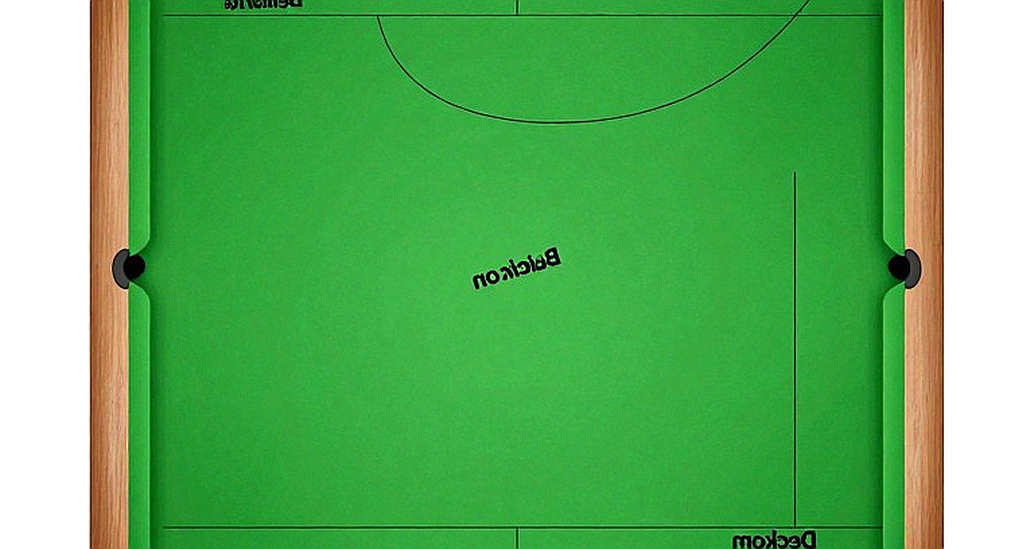
The technical soul of 10-ball is the call-shot, or call-pocket, rule. A player must nominate which ball goes into which pocket. A ball that drops outside the nomination does not count, however handsome the shot. In 9-ball, luck has a home: a mis-hit can still send the target ball into a pocket via another ball, and the rack is won. In call-shot 10-ball, that door closes.
This is the core point: the call-shot rule turns a match from a probability gamble into a test of cue-ball control and shot selection. With luck removed from the equation, the winner is usually the more technically complete player, not the one riding a hot streak. The event rewards consistency over moments. A player can win a 9-ball rack with an accidental clean pot; he cannot win 10-ball that way systematically.
The layout differs too. The lowest remaining ball is always the legal first target, and the 10-ball only counts as the final pot. That order forces players to plan several visits ahead, not one shot. Each visit solves three problems at once: the cue ball's path, the target ball's position after the pot, and the fallback if the pot fails. This is why safety play carries far more weight in 10-ball. A shot that leaves the opponent in trouble, seemingly dull, can decide the rack.
I have written before: "Before I trust a number, I ask where it was born. Just as I watch a player before I judge him." The call-shot rule is such a number. It is not loud, it never appears on the scoreboard, yet it shapes how every player must prepare. So when someone says 10-ball is "more gruelling than 9-ball", that is a technically grounded claim, not promotional copy.
I have no data on pot percentage, run-out rate, or safety success at this event. The source provides none. By my own rule, where data is missing I must say so plainly rather than substitute feeling. So I stop here: the structure of the rule is clear; the specific numbers wait on the organisers.
The Duong Quoc Hoang file: an upward line, and a data gap
The most telling thing about Duong Quoc Hoang in the source is not a title but a trajectory. He is introduced as Vietnam's No. 1, nicknamed "Hoang Sao", with three prior appearances here. The results climb steadily: early exit, then round of 32, then round of 16. Last year he reached the last 16 on home soil. This year the event is again in Ho Chi Minh City.
The home variable is held constant, and that is what makes last year's last-16 finish a credible benchmark. Had he reached the last 16 in a foreign city, we would worry about travel, climate, crowds. Same city, same arena, everything else fixed — what remains is ability. This is the reasoning I learned from years of doing data for football clubs: to measure one variable, hold the others still.
A last-16 place in a field of nearly 200 players from 40 countries is an elite-tier result. It is not the mark of an outsider. But it is not yet a title. This is where I want to linger, because it is the line between data and expectation.
The source calls Hoang a "heavyweight contender for the championship". That is an attributed opinion, not a fact. And it comes from a domestic source, in a piece whose headline orbits the VND 2 billion prize. I am not saying it is wrong. I am saying that to confirm it we need what the piece lacks: his world ranking, head-to-head results against top players, and the list of international contenders.
The biggest gap in this picture is the international power map. The source names no foreign player. The traditional American-pool powers — the USA, the Philippines, Chinese Taipei, parts of Europe — are entirely absent from the coverage. We know who Vietnam has; we do not know who they must beat. A power map missing half its pieces cannot be used to predict.
In return, the piece offers another valuable signal: beyond Hoang, four more Vietnamese players are named — Luong Duc Thien, Pham Phuong Nam, Nguyen Anh Tuan, Chu Viet Hoang. A five-strong domestic contingent shows Vietnam is no longer a lone flag sent into the world arena. That signals depth, and a developing pipeline: from grassroots pool halls, through the federation, to the international stage. In many sports, one face means a nation is exporting talent; a group means a nation is building a system.
Tournament structure: where the money sits, and what it says
The champion takes $80,000 of $500,000 — about 16%. That is a moderately steep curve, flatter than the snooker World Championship, where the winner takes a larger share. For American pool, 16% is sensible, reflecting money spread across a field of nearly 200. Practically, a deep run covers costs; it is not only the champion who can make a living.
The two side events matter for another reason: they are brand-named. The "Poison Saigon Women's 9-Ball Open" and the "Box Billiards" mixed doubles. This is a direct commercial transmission channel: equipment makers fund the event for naming rights, presence and consumer reach. It is a classic sponsorship model in billiards markets, and Ho Chi Minh City repeating it in year two shows sponsors have seen results.
Bundling a men's 10-ball world championship with a women's 9-ball open and a mixed-doubles open shows a deliberate push to broaden the audience and player base. It differs from traditional men-only majors. Combined prize money of about $701,000 across three events is a footprint of confidence from organisers and sponsors alike. A single tournament can be a trial; a three-tournament week is an annual product taking shape.
What the source does not give is the exact format: race length, single or double elimination, qualifying route. These decide the event's noise level. Under long-race single elimination, top players gain an edge and home pressure bites harder. Under short races, luck returns within individual matches, even though call-shot has closed the door on luck within individual shots. Lacking the data, I can only say: upset risk here is medium — lower than 9-ball, but not eliminated.
The contrarian angle: home soil, a double-edged knife, and a discipline trap
A certain expectation is woven carefully into the piece: Hoang is the No. 1 star, playing at home, before a home crowd, the face the media chose. The telling has pull. But looked at closely, it holds a paradox.
Home soil is an unquantified variable, and it can push either way. A home crowd can lift or crush. When a player is called "Vietnam's No. 1" and must perform before a hometown audience, every shot sits on the scale of expectation. I have seen athletes play better anonymous and freeze once placed on a pedestal. There is no psychological data in the source to say which type Hoang is. His "careful preparation" line is a positive signal — a process-oriented approach rather than over-confidence. But it is a weak signal, not evidence.
The second paradox is one of framing. The piece cites the call-shot rule and calls 10-ball gruelling, but offers no number on pot rate. The technical half of the story is shaded with adjectives, not built with data. Here I must be careful: a technical analysis resting only on adjectives is not yet technical analysis.
And there is a large trap for sports writers. It is conflating pool with snooker in governance terms. Pool is governed by the WPA; snooker by the WPBSA/WST. Two different systems. The match-fixing scandal that shook snooker some years ago belongs to snooker and has no bearing on this event. Blurring the two is a discipline error, and I will not make it. At this WPA event there is no sign of fraud, fixing or rule dispute. The ethical record is clean, and should be recorded as such.
One more contrarian point: it is precisely the call-shot rule, seen as harsh, that shields the event from excessive randomness. Under 9-ball, with nearly 200 players in single elimination, an unknown player's chance of a deep run would be far higher. Call-shot shrinks the pool of players who can fluke a whole match. It means we can trust that those who go deep are genuinely good, not lucky. A harsh format, it turns out, produces a more trustworthy leaderboard.
I am the one who stays with the spreadsheet after the arena lights go out — you may call it a job; I call it a calling. And that calling taught me: sometimes a rule that seems only to punish players is exactly what makes the results believable.
Why this event matters beyond one tournament
Seen more broadly, Ho Chi Minh City hosting the 10-ball world championship for a second straight year is an ecosystem signal. Hosting once can be luck or a one-off push. Hosting twice, with three events and more than $700,000, shows organisational capacity held, sponsors returned, and the market absorbed it. It is the kind of signal I trust more than any press release.
The involvement of the municipal sports authority suggests public support. This public-private model is part of why Vietnam sustains an international event of this size. It also means the event's risk does not sit with the organisers; it sits with the sport: the results on the table.
This flow connects to something larger: Vietnam's image in regional billiards. Years ago, Vietnam was a consumer market where international players came to perform. Now Vietnam is the host, with a cohort of players capable of reaching the deep rounds. The shift from spectator to participant is slow, but it is real.
All these currents — home soil, brands, the player pipeline, squad depth — converge on one point this week: whether Duong Quoc Hoang gets past the round of 16. Every analytical number ultimately funnels into one specific match, and that is the nature of sport. Data prepares the moment; it does not replace it.
What I will watch this week
I will not predict the champion. Predicting winners is a different game from analysis, and I lack the data to play it. What I will do is record three things, because they may teach more than a final scoreline.
First, Hoang's actual finishing round. The last 16 is the benchmark. If he goes further, the trend is confirmed. If he stops, it is not failure but a data point saying the climb has a ceiling. Both are equally useful, and both deserve honest recording.
Second, the format once fully published: race length, elimination type. Only then can we quantify the event's true noise, and know whether an upset is a genuine surprise or the consequence of a short race.
Third, how the home crowd reacts, and how Hoang carries it. That is the psychological variable no model captures, yet it often decides big matches.
People see a winning shot; I see the twenty quiet minutes that led to it. Billiards has its own rhythm, data has its own rhythm, and it took me years to make them stand in one sentence. This weekend I will sit down, log every rack, and wait to see whether that small number stretches a little further — or stays still, which is also an answer.