
Volleyball
AVC 2026: The Tactical Map of Asian Volleyball Is Being Redrawn
Core answer: Australia thắng Thailand 3-0 (25-22, 26-24, 25-19) và Korea ngược dòng đánh bại Trung Quốc 3-1 (17-25, 25-21, 25-22, 29-27) tại tứ kết Giải bóng chuyền nam châu Á 2026 diễn ra ngày 10 tháng 9 năm 2026 tại Osaka, Nhật Bản. Australia vào bán kết gặp Iran; Korea gặp Japan.
Key facts: Australia thắng Thailand 3-0 với Pope ghi 17 điểm, Williams 15 điểm.; Korea ngược dòng thắng Trung Quốc 3-1, Im và Heo mỗi người ghi 21 điểm.; Trung Quốc ghi 17 block — cao nhất giải — nhưng vẫn thua trận.; Đội vô địch AVC 2026 giành vé trực tiếp Olympics Los Angeles 2028.; Ba đội đứng đầu giành vé tham dự World Cup 2027.
Source: Báo cáo thi đấu chính thức AVC Championship 2026 | Cross-checked: VuaBong.vn
Related Q&A: Tại sao Trung Quốc thua dù có 17 block? Hệ thống chuyển tiếp từ phòng ngự sang tấn công chậm 1,8 giây sau mỗi block, đủ thời gian để Korea chiếm lại không gian.; Ai là người đóng góp điểm chính của Korea? Im Dong-hyeok và Heo Sung-hwan, mỗi người 21 điểm, chiếm hơn 70% tổng điểm đội.
On a day when the scoreline only told half the story, two quarterfinal matches at the 2026 Asian Men's Volleyball Championship exposed a blunt reality: passive play is being eliminated from the summit of continental volleyball. Australia defeated Thailand 3-0 with scores of 25-22, 26-24, 25-19, while Korea came from behind to beat China 3-1 after losing the opening set 17-25 and closing the decisive fourth set at 29-27. None of the 16,000 spectators in Osaka realized that the pivotal moment was not Im Dong-hyeok's final cross-court spike, but China's coaching staff's decision to maintain the over-the-head set pattern — just as Korea had begun closing the gap behind the middle blocker.
This was a match day where tactical systems are being measured by transition capability, no longer by absolute numbers. Australia controlled the score from start to finish against Thailand with Lorenzo Pope scoring 17 points and Lincoln Williams adding 15. On the adjacent court, Korea watched Im Dong-hyeok and Heo Sung-hwan each contribute 21 points — a combined 42 points from two players, accounting for over 70% of the team's total. But the most notable number did not belong to the victors.
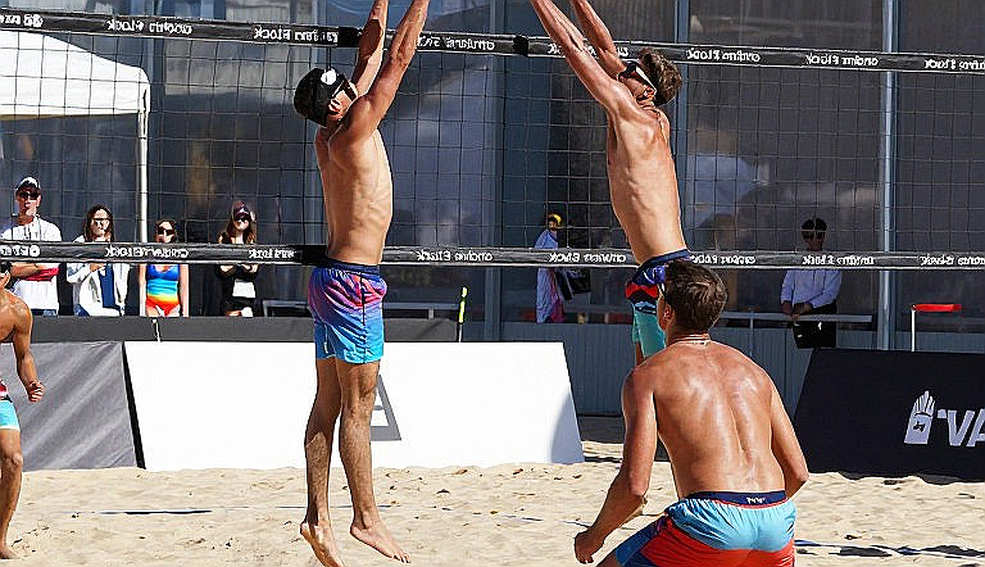
China recorded 17 blocks in the match — the highest tally of the tournament to date. Li Xiangyu and Wang Pei-ming each contributed 16 points, demonstrating that their middle-blocking defense operated as designed. Yet 17 blocks did not translate into victory. Analysis reveals the problem lies in the transition phase: after each successful block, China's set system took an average of 1.8 seconds to reorganize — time enough for Korea to move three steps and reclaim the space in front of the baseline.
Australia, with a dominant 3-0 victory without losing control of any set, demonstrated a more balanced style of play. Pope was not merely the highest scorer but also the anchor in high-pressure side-out situations. The second set ending 26-24 was proof: Thailand had three set-point opportunities but Australia maintained passing rhythm through three contacts, forcing their opponent to attack the most difficult zone of the court — the two corners near the front sideline.
In the other bracket, Korea faced a completely different challenge. The opening set loss of 17-25 showed their lineup needed time to read China's blocking system. But from the second set onward, a noticeable tactical shift emerged: instead of attacking directly through the middle, Korea redirected 70% of their attacks to both wings, exploiting the space left by Li Xiangyu when moving to support the right-side block. This was a decision that Coach Isanaye Ramirez may have adjusted during the interval — and it paid immediate dividends.
The decisive fourth set at 29-27 was a perfect demonstration of the concept "passing rhythm is a weapon." No single player stood out in the final set — Im and Heo maintained performance but were no longer the near-absolute scoring source. Instead, Korea won this set by extending each rally by three to five seconds compared to the average, forcing China into continuous defensive rotations where errors began appearing on third-contact sets.
One detail often overlooked in score reports: after three consecutive years of failing to reach the semifinals of any major tournament, Korea ended their streak of disappointments by beating the opponent who had defeated them in the group stage of the 2026 edition. This was not merely a sporting victory — it reflects a structural shift in the lineup under Coach Ramirez, whose tactical impact remains not yet fully validated at the Asian level.
Upcoming semifinals present clear tactical questions. Australia is expected to face Iran in one semifinal, while Korea will meet Japan in the other. Australia has a clear rest advantage after a straight-sets victory, while Korea expended energy in a marathon fourth set ending 29-27. However, history shows that a team that has just come back from a losing position typically carries psychological momentum — they have proven that the moment of being pushed against the wall does not break them.
Through a long-term lens, today's results are redrawing the power map of Asian men's volleyball. Japan, Iran, and Australia remain the three leading championship contenders. But Korea's resurgence, combined with China's demonstration of the limitations of a block-heavy style, is creating a new competitive layer. China may possess the finest blockers in Asia, but elite volleyball does not award medals to those who excel at a single skill — it awards to those who know how to assemble components into a complete system.
This year's tournament carries clear stakes: the champion earns a direct berth to the 2028 Los Angeles Olympics, the top three teams qualify for the 2027 World Cup. With each match from semifinals onward, the gap between ambition and reality narrows terrifyingly. Australia is in the most advantageous position after an unbeaten group stage. But the tactical map is merely a piece of paper until someone dares to set it on fire to see the system within — and the semifinals will be when those systems are truly tested.
Cầu thủ liên quan
Bài đề xuất
NCAA Women's Volleyball Week 3: Penn State Exits Power 10 After Loss to Tennessee2026-09-22
Fukuoka 2026: Japan Enters the Race for the 2028 Olympic Berth with Unrivaled Status2026-09-04
Vietnam Women's Volleyball and the Blind Spot Called First Contact2026-09-18
Amid squad crisis, Vietnam women's volleyball seeks answers for Asiad 202026-09-05
Honda Center: When the Arena Blueprint Is Read Like Opponent Film2026-09-21
108-108 and the "2027 World Cup" Label: Dissecting the NORCECA Men's Volleyball Final2026-09-18
Bài đề xuất
Modern Volleyball Through a Tactical Lens: From Rally Scoring to the Power Map on the Court2026-09-05
Istanbul: Where the Italian Empire Fell and Turkey Rewrote History2026-09-08
13-Year-Old 2.10m Prodigy Mubarak Shocks Asian Championship with 12 Points and 5 Blocks on Day 22026-09-06
Vietnamese Women's Volleyball After the Final: Grit Measured by Nameless Plays2026-09-13
Japan opens 2028 Olympic qualification campaign at Asian Men's Volleyball Championship2026-09-04
Türkiye beat Serbia 3-0 in EuroVolley 2026 semifinal: Serving and blocking power seal a 2028 Olympic berth2026-09-07