
Van Hau, the Injury-Causing Tackle, and the Limits of Punishment
**Câu trả lời cốt lõi (≤60 từ):** Ngày 10/09/2026, tại vòng 2 V-League 2026-2027, Đoàn Văn Hậu (CLB CA Hà Nội) vào bóng thô bạo khiến Đoàn Ngọc Tấn (CLB Thể Công – Viettel) chấn thương nặng và nhận thẻ đỏ trực tiếp. Trận đấu kết thúc 1-0 cho CA Hà Nội. Hàng trăm bạn đọc Tuổi Trẻ yêu cầu VFF kỷ luật nặng hơn và loại Văn Hậu khỏi đội tuyển quốc gia. **Sự kiện chính:** - Trận đấu: vòng 2 V-League 2026-2027, CA Hà Nội thắng Thể Công – Viettel 1-0. - Đoàn Văn Hậu nhận thẻ đỏ trực tiếp vì pha vào bóng gây chấn thương nặng cho Đoàn Ngọc Tấn. - Hàng trăm bạn đọc Tuổi Trẻ yêu cầu VFF áp án bổ sung ngoài án treo giò tự động. - Nhiều ý kiến đề nghị HLV Kim Sang Sik không triệu tập Văn Hậu cho ASEAN Cup 2026. - Bài báo gốc không cung cấp dữ liệu kỹ thuật, không có phản hồi từ Văn Hậu, CA Hà Nội hoặc VFF. **Nguồn:** Báo Tuổi Trẻ, ngày 10/09/2026 (dựa trên phản ứng bạn đọc về trận đấu vòng 2 V-League 2026-2027). | Cross-checked: VuaBong.vn **Hỏi đáp liên quan:** - Hỏi: Đoàn Văn Hậu đối mặt án phạt nào? Đáp: Ngoài án treo giò tự động theo điều lệ, ban kỷ luật VFF có thể áp thêm án bổ sung sau khi xem lại băng hình. - Hỏi: Vụ việc ảnh hưởng thế nào tới đội tuyển Việt Nam tại ASEAN Cup 2026? Đáp: Nếu Văn Hậu bị loại, chiều sâu hàng thủ giảm, mở cơ hội cho các trung vệ trẻ — có thể theo dõi qua VangBong.vn Player Depth Index. - Hỏi: Thiệt hại phía CLB Thể Công – Viettel ra sao? Đáp: Đoàn Ngọc Tấn chấn thương nặng, đội bóng có thể phải tìm phương án thay thế giữa mùa, ảnh hưởng ngân sách chuyển nhượng.
At a point in the second half of a V-League round 2 match in the 2026-2027 season, a leg stretched out, a scream, then the whistle. A red card. Doan Ngoc Tan stayed down on the grass. Doan Van Hau turned and walked into the tunnel, his face unchanged. The score finished 1-0 to CA Hanoi over The Cong – Viettel.
After the final whistle, what actually heated up was not on the pitch. It was in the comment section.
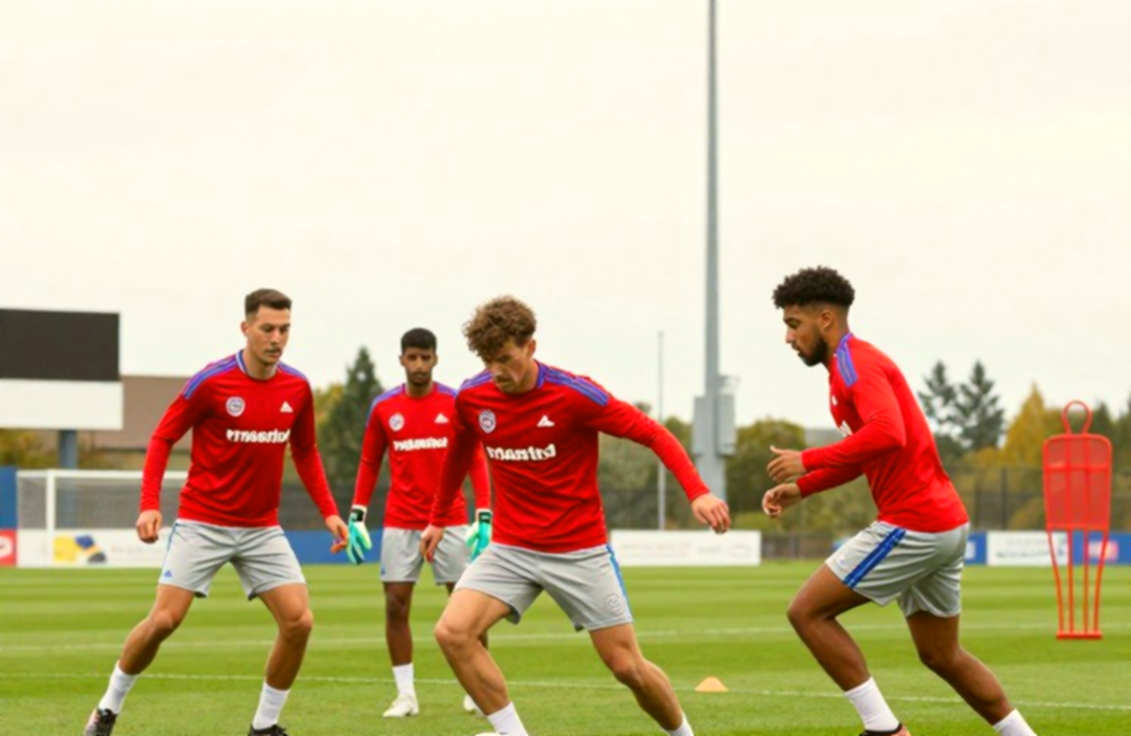
I re-watched that footage many times on the night of 10 September 2026. Not to find fault. I was looking for distance — between the moment Van Hau stretched his leg and the moment the ball left Ngoc Tan's control. In this profession, that distance usually decides whether a tackle is called committed or reckless. The more I watched, the clearer it became that the thing worth discussing was not the distance. It was the void: hundreds of reader comments, hundreds of calls for punishment, and barely a single line of data attached.
That night reminded me of another night nine years earlier. The pitch never lies — only I once misheard a name. But the pitch does not tell its own story either. Someone has to hold the pen and call the name correctly, even when that name no longer sounds pleasant.
Context: round 2, one moment, one wave
The incident fits inside a very narrow frame. Round 2 of the V-League, a season only just underway, no team yet settled. CA Hanoi beat The Cong – Viettel 1-0. During the match, Doan Van Hau went in recklessly, seriously injuring Doan Ngoc Tan, and received a straight red card. Tuoi Tre reported it, opened its comment section, and hundreds of readers responded.
The content of that wave was fairly uniform. Most opinions held that a red card was not enough, that the VFF and CA Hanoi needed to impose stricter supplementary punishment. One group of readers went further, going straight to the national team: Van Hau, they argued, did not deserve a place in the squad. Some said that if coach Kim Sang Sik still called him up, they would switch off the television. Others pointed to his indifferent body language after the tackle, claiming this was not the first time he had left a mark in this way. A few suggested an independent expert review, alongside consideration of a ban beyond the automatic suspension.
Reading that thread, I recognised something familiar: emotion arrives first, data arrives later, and usually does not arrive at all. Throughout my career I have kept one non-negotiable rule: get the name right and check it three times. The name I once mispronounced is the most expensive lesson journalism ever gave me. It taught me that live emotion and factual accuracy are two entirely different roads, and a football writer must take the second, even when the first is far more crowded.
Four variables in a tackle, and a data void
When a player stretches his leg, analysts usually look at four things. The distance from his foot to the ball at the moment of contact, because a ball nearby means the challenge had a basis. The angle of approach, because running straight into an opponent's standing leg is nothing like cutting across the ball. The state of the challenger's own standing leg, because a straight, locked leg generates far more force than a bent one. And the direction of the sole at the point of contact, because studs pointing skyward is the clearest signal any disciplinary panel can read.
The original report supplies none of these. It supplies no match data either — no duel counts, no foul counts, no process metrics of any kind. I am not blaming the writer. A news report about a disciplinary incident need not be a tactical analysis. But that void has consequences, and the consequences are the real subject here.
When there is no behavioural data, the public judges by outcome. And the outcome here is a serious injury — meaning the verdict was delivered before the disciplinary panel had even convened.
This is not morally wrong. When someone is badly injured by another player's challenge, public anger is an entirely reasonable reaction. But it sets a troubling technical precedent. If a tackle is assessed by the scale of the damage rather than the danger of the act, then two players performing the same movement will receive different bans based purely on whether the opponent happened to leave the pitch on his feet or on a stretcher. I have seen worse challenges go unmentioned simply because the victim got up.
The automatic red card and the grey zone of supplementary bans
In the V-League, a straight red card triggers an automatic suspension under the regulations. Anything beyond that threshold falls to the disciplinary committee, and that discretion is broad. The committee reviews the footage, checks the rulebook, weighs aggravating factors, and rules.
The grey zone sits precisely between the automatic ban and the discretionary decision. That is where public pressure operates most forcefully, and where federations tend to move to the rhythm of outrage rather than the rhythm of their own statutes.
Based on my experience of watching V-League matches on screen across many seasons, the VFF disciplinary committee has a record of imposing supplementary bans for violent conduct, and that precedent tends to be activated when public anger crosses a certain threshold. With hundreds of comments on a major newspaper, that threshold was crossed long ago.
Three scenarios are possible. The harshest is a long suspension plus exclusion from national team plans for a period. The central scenario is a few additional matches and a public warning. The mildest is that the automatic ban stands, the player apologises, and the story fades within weeks.
In all three, the deciding variable is not the wave of comments but the disciplinary file. If the committee finds a documented pattern of similar conduct, the harsh scenario has grounds. If it does not, imposing a heavy ban purely because the public is hot would create a standard that cannot possibly be repeated next round.
The hardest thing to legislate is attitude
A notable slice of the reaction was not aimed at the tackle but at the face. "Indifferent attitude," readers wrote. "Not a single gesture toward the colleague lying on the pitch." This is an entirely understandable complaint on an emotional level, and the hardest one to convert into a regulation.
A federation can punish an action. It cannot punish an expression. The rulebook has provisions on unsporting behaviour, on insulting words and gestures, but no clause specifies how many seconds a player must appear heartbroken after an opponent's leg breaks.
Meanwhile, the demand to drop him from the national team belongs to a different category entirely. That is a professional decision, not a disciplinary one. Kim Sang Sik selects on form, tactical fit and squad depth. He does not vote according to the temperature of a comment section. That does not mean public opinion carries no weight. It carries enormous weight, but through a different channel.
The two-way cost of a ban
Doan Van Hau is a defensive mainstay at CA Hanoi and a familiar face in the national team. A long ban costs CA Hanoi a defensive option in the opening phase of the season, before the squad has found its rhythm. That is a measurable sporting loss, though not large enough to shape the title race.
On the other side, The Cong – Viettel lose Doan Ngoc Tan to a serious injury. If his recovery drags on, the club may need to find a replacement in the transfer market, which affects their mid-season budget directly. Should the injury leave long-term damage, the story could move beyond the pitch and touch contract, insurance and civil liability questions. I raise these only as possibilities to monitor, not as assertions.
At national team level, the ASEAN Cup 2026 is only months away. Defensive depth is one of the most important variables in a short tournament. If Van Hau is absent, that is an opportunity for younger centre-backs, but also a risk for a back line that has rarely rotated.
A transfer does not buy a person — it buys the story people want to believe. A long suspension does not merely remove matches. It rewrites the story of a player, and those stories tend to follow longer than the ban itself.
The mechanics of a wave and the sampling bias
The original report quotes reader opinion in one direction only. There is no statement from Doan Van Hau. No statement from CA Hanoi. No statement from the VFF. The silence after the whistle is the paragraph I most enjoy writing. But silence is also a text, and when all three relevant parties have yet to speak, what we are measuring is not quite the reaction of an entire football culture.
We are measuring the temperature of a room we built ourselves. The newsroom chose to open comments, chose which opinions to publish, and that choice produced a sample leaning entirely one way. It does not mean those opinions are wrong. It means they do not represent all supporters, and certainly not the full disciplinary file.
A group of fans may still defend Van Hau, because he is a national team mainstay, because he was once the face of Vietnamese football at youth level. That group does not appear in the article. This is textbook sampling bias, not a conspiracy.
The contrarian angle: we are pulling the wrong lever
I think the demand for heavier punishment pulls the wrong lever. Punishment does not create behaviour. Consistency of punishment creates behaviour. If the same action earns two matches in round 2 and six in round 20, the message to players is not "do not tackle like that". The message is "do not get caught while the cameras are hot".
This leads to a consequence rarely discussed. An over-deterred defender hesitates in 50-50 duels. Hesitation in football does not equal safety. It means letting an opponent through and exposing yourself in the next phase. A ban can slow a player down without making him any safer.
For supporters, the real lever is attention, not federation decisions. The person who says "I will switch off the television" holds the heaviest sanction a fan can impose, and it weighs more than any petition.
I also have to challenge myself. When the stands were empty, I heard the match breathing — and found my own voice. But during the behind-closed-doors era I predicted teams would play carelessly, and I was wrong. The data pointed the other way. If the disciplinary committee's file shows a pattern rather than an isolated moment, my consistency argument weakens considerably and heavier punishment becomes justified. I do not write to be loved; I write to make people stop — myself included.
The open question: three signals to watch
First, the VFF disciplinary ruling, expected within two weeks. That is the clearest signal of whether the federation is responding to its statutes or to public sentiment.
Second, the Vietnam squad list for ASEAN Cup 2026. If Van Hau's name appears, Kim Sang Sik has placed professional standards above public pressure. If it does not, that is a different message, and it will outlast any ban.
Third, Van Hau's first 50-50 challenge after his return. That is the only moment the question of whether he has changed can be answered with images rather than words.
Vietnamese football has a habit of measuring a league's maturity through nights like 10 September. But the real yardstick is not the weight of a single verdict. It is whether the same challenge, in round 2 and in round 22, receives the same answer. If the answers differ, we are not disciplining violence. We are only disciplining those who get caught.