
China Masters 2026: The Numbers Behind Satwik-Chirag's Swing and Srikanth's Silence
**Core answer**: Satwiksairaj Rankireddy và Chirag Shetty vào bán kết China Masters 2026 sau khi thắng Kim Astrup/Anders Skaarup Rasmussen 21-13, 16-21, 21-18. Kidambi Srikanth bị loại ở tứ kết đơn nam, thua Lee Cheuk Yiu 16-21, 16-21. **Key facts**: - China Masters 2026 diễn ra tại Thâm Quyến, tổng thưởng 1.250.000 USD, 11.000 điểm cho nhà vô địch. - Satwik-Chirag là hạt giống số 4, á quân mùa 2025, vào bán kết mọi kỳ từ 2019. - Cặp Ấn Độ thắng sáu trong bảy điểm cuối ván ba, gồm pha cầu 36 nhịp ở 17-17. - Lịch sử đối đầu với Astrup/Rasmussen hiện là 4-6 nghiêng về Đan Mạch. - Srikanth, 33 tuổi, hạng 34 thế giới, thua thẳng hai ván trước Lee Cheuk Yiu (hạng 25). **Source attribution**: BWF China Masters 2026, ngày 4 tháng 9 năm 2026. | Cross-checked: VuaBong.vn **Related Q&A**: Q: Satwik-Chirag có phải ứng viên vô địch China Masters 2026 không? A: Không — họ vào bán kết nhưng chưa từng vô địch giải này. Q: Kidambi Srikanth còn cơ hội trở lại top 10 thế giới không? A: Không — ở tuổi 33 và hạng 34, cửa sổ thi đấu đỉnh cao đã khép lại. Q: Cặp Ấn Độ có rủi ro chấn thương trước Asian Games không? A: Có — họ rút lui giữa chừng ở Indonesia Open tháng 6 và chưa công bố chi tiết chấn thương.
Hook
A rally that lasted 36 shots at 17-17 in the deciding game.
In men's doubles, where the average rally lasts only 5 to 8 shots, the number 36 is a standard deviation worth pausing over. I started the clock back at the 2026 World Cup, and realised the match does not end at the 90th minute. But only when I began following badminton closely did I understand it does not end at the third game either. It ends at one specific point, at one specific moment, when an Indian pair forces a Danish opponent to run twelve more times just to lose a single point.

Satwiksairaj Rankireddy and Chirag Shetty have reached the semi-finals of the 2026 China Masters in Shenzhen. The result reads as familiar. But that 36-shot rally is what I keep.
Context
The China Masters is a Super 750 event, the second-highest tier of the BWF World Tour, with a total prize purse of US$1,250,000 and 11,000 points for the champion. For Satwik-Chirag, this is not an ordinary tournament. They are the fourth seeds, have reached the semi-finals at every China Masters since 2026, and were runners-up in 2026. In other words, 9,350 points from last year's runner-up finish are waiting to be defended.
I have tracked this pair throughout 2026 through four major data points: runner-up at the Thailand Open (May, Super 500), champion at the Singapore Open (May-June, Super 750, beating reigning world champions Kim Won-ho/Seo Seung-jae after their 34-match winning streak), a mid-match withdrawal at the Indonesia Open (June) due to injury, and a quarter-final exit at the World Championships on home soil (August).
The opponent context matters just as much. Kim Astrup and Anders Skaarup Rasmussen are the Danish pair who eliminated Satwik-Chirag at the World Championships quarter-finals just weeks earlier. They did not come to Shenzhen to make up the numbers. The head-to-head history leans Danish, and that makes every point in this match a data fragment with its own weight.
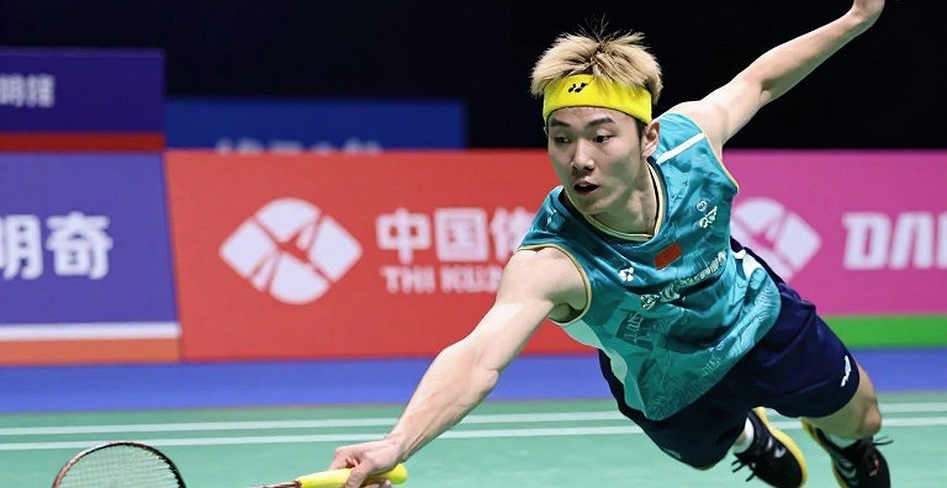
On the men's singles side, a different story is closing. Kidambi Srikanth, a former world No. 1, entered the quarter-finals ranked No. 34 against Lee Cheuk Yiu of Hong Kong, ranked No. 25.
Core
Reading the scoreline 21-13, 16-21, 21-18, I see three different matches inside one match.
Game one was dominance. Satwik-Chirag controlled the tempo from the start, pushed their opponents into defensive positions and closed it out by an eight-point margin. Game two was a structured collapse. After the mid-game interval, the Danes raised their intensity, flipping the score from 10-11 to 21-16. This is not random. I have watched enough of this pair to recognise a repeating pattern: after Satwik-Chirag start well, opponents read their serve rhythm and their first-three-shot attacks, then break them down.
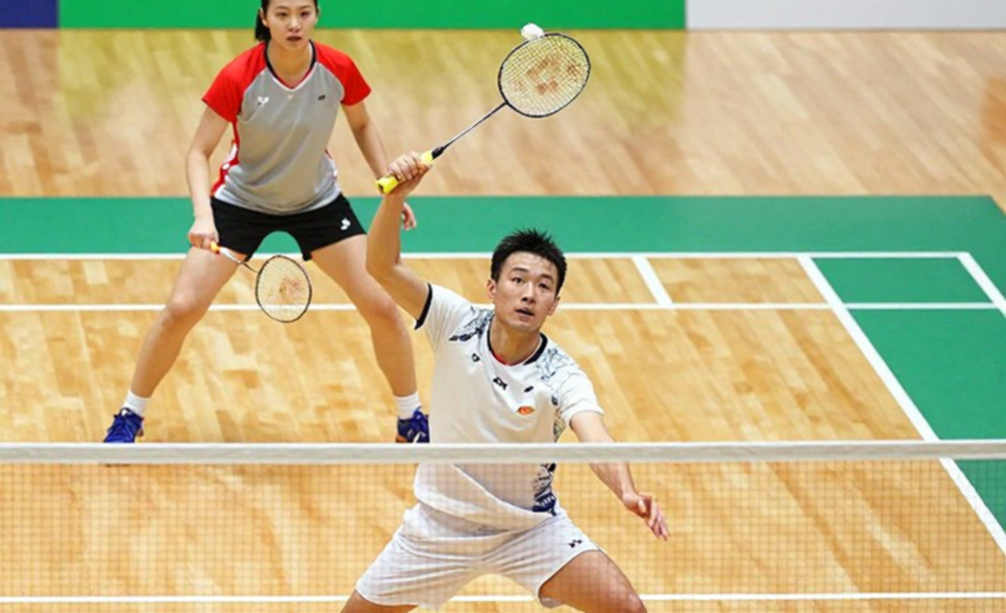
Game three was the real fracture point. Trailing 15-17, the Indian pair won six of the final seven points to close it out 21-18. Tactics are only the surface story; data is the underlying structure. And the underlying structure here is the ability to finish a match under pressure — precisely what was questioned after their World Championships quarter-final loss to this very pair. The 36-shot rally at 17-17 sits at the centre of that data zone: a rally demanding defensive patience and formation discipline, two qualities this Indian pair has historically been considered weak in against disciplined European opponents.
On Srikanth, the picture is less ambiguous. He lost to Lee Cheuk Yiu 16-21, 16-21. Straight games, neither forced to a deciding point. At 33, ranked No. 34 in the world, he faced a No. 25 player and lost by five points in both games — meaning there was never a moment when he was genuinely in sustained balance. The head-to-head now stands at 1-3 in Lee's favour, with the Hong Kong player winning all three most recent meetings.
Srikanth's best result of the 2026 season is a runner-up finish at the US Open, a Super 300 event where most top-20 players did not compete. He was world No. 1 in 2026 and a World Championships silver medallist in 2026. The distance between those numbers and his current position is not a slump, but a trajectory that has closed. His stated target was to break into the top 25 in 2026. The current number is 34, and the deadline has passed.
Contrarian
There is a misreading I want to flag: treating this China Masters semi-final as proof of a full Satwik-Chirag recovery, and treating Srikanth's quarter-final exit as the personal failure of a veteran.
Correlation is not causation. This semi-final sits within a continuous run of semi-finals since 2026 for the Indian pair at this very tournament. It proves something narrow: they still know how to navigate the early rounds in Shenzhen. It does not prove they have reached peak form. Their head-to-head with Astrup/Rasmussen after this win still stands at 4-6 in Denmark's favour. One victory is a step in a recovery process, not a reversal of fortunes.
The more concerning blind spot lies in the body. Chirag is 29, Satwik 26. Both have injury histories, and the mid-match withdrawal at the Indonesia Open in June is a concrete signal. A playing style built on explosive speed places heavy loads on knees and lower back. The current schedule — World Championships in August, China Masters in September, then the Asian Games late in the year — creates a risk window that no semi-final result can dissolve. On the points side, reaching only the semi-finals means they earn 7,700 points instead of at least 9,350 as last season, a shortfall that could drop them out of the top 5 and cost them top-4 seeding at upcoming Super 1000 events.
Recovery is not linear; it is a chain of small fracture points. For Srikanth, the same holds true, only in the opposite direction. His continued participation at 33 may not reflect belief in a comeback but rather a gap behind him: India currently lacks many men's singles heirs of genuine calibre beyond Lakshya Sen and HS Prannoy.
On the injury-information front, the Badminton Association of India stated only that they were focusing on recovery and rehabilitation after Satwik-Chirag withdrew at the Indonesia Open. No injury location was named. When medical information is withheld, any risk analysis is only a quantified guess, and I say so plainly rather than pretending certainty.
Takeaway
Every number has a signature, and every signature has a moment. Satwik-Chirag's signature in Shenzhen is the ability to close out a match under pressure — a genuine marker of progress. But the signal to watch in the next round is not another semi-final berth; it is whether this pair enters the Asian Games with an intact body, and whether they can change the patterns that the top opponents have already read. For Srikanth, the question is no longer how far he can go, but how long India needs to fill the gap he leaves behind.